Best CPU for RTX 5060: 5 Processors That Won't Hold It Back (2026)
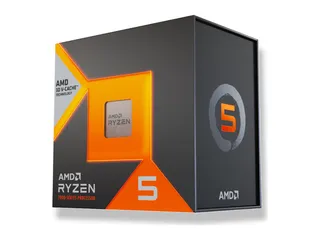
Quick answer: The AMD Ryzen 5 7500X3D is the best CPU for the RTX 5060: its 96MB of 3D V-Cache keeps frame rates high at 1080p, where this card is most at home. Intel fans should get the Core Ultra 5 250K Plus, the Ryzen 5 7500F is the budget pick, and the Core i5-14400F and Ryzen 5 5600 let you keep using DDR4 memory while prices are high.
We earn a commission when you buy through links on this page, at no extra cost to you. Brands can't pay to be ranked. How we review products
The GeForce RTX 5060 is a 1080p card first, and at 1080p the processor has a big say in your frame rate. Pair it with a slow or old CPU and the graphics card sits waiting; overspend on the CPU and you've taken money away from the parts that matter more. There's a second, less obvious catch. The RTX 5060 uses eight PCIe lanes instead of the usual 16, so the platform you put it in, and whether that platform runs PCIe 5.0, 4.0 or 3.0, affects how it copes when its 8GB of video memory fills up. These five processors cover new AM5 and Intel builds as well as cheaper DDR4 upgrades, and the buying guide below explains the RTX 5060's CPU and platform requirements in plain terms.
This guide is for anyone building a new PC around the RTX 5060 or upgrading an older system to use one. Once you've picked a processor, match it with a board from our best motherboard for RTX 5060 guide, size your power supply with our best PSU for RTX 5060 guide, and choose a screen from our best monitor for RTX 5060 picks.
Best CPUs for the RTX 5060 at a glance
 Best IntelCheck price
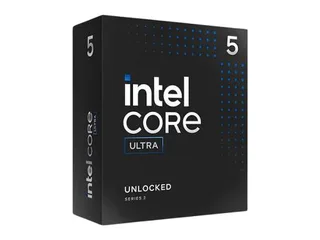
Intel Core Ultra 5 250K Plus
18 cores, strong gaming speed and integrated graphics for about $200.
Best CPUs for the RTX 5060 compared
Every pick here has enough speed to drive the RTX 5060 at 1080p. The differences are cache size, which helps frame rates most, and the platform each one sits on.
| Processor | Best for | Cores / threads | Max boost | Cache | TDP | Socket / memory |
|---|---|---|---|---|---|---|
 |
Overall | 6 / 12 | 4.5GHz | 96MB L3 | 65W | AM5 / DDR5 |
 |
Intel | 18 / 18 | 5.3GHz | 30MB | 125W | LGA1851 / DDR5 |
 |
Budget | 6 / 12 | 5.0GHz | 32MB L3 | 65W | AM5 / DDR5 |
 |
DDR4 builds | 10 / 16 | 4.7GHz | 20MB | 65W | LGA1700 / DDR4 or DDR5 |
 |
AM4 upgrade | 6 / 12 | 4.4GHz | 32MB L3 | 65W | AM4 / DDR4 |
The 5 best CPUs for the RTX 5060 reviewed
Ranked by how well each processor keeps an RTX 5060 fed at 1080p and 1440p for the money, taking the cost of the board and memory into account.
1AMD Ryzen 5 7500X3DBest CPU for RTX 5060 overall
6 cores and 96MB of 3D V-Cache on AM5, at a mid-range price.

Our score
- Gaming speed
9.3 9.3- Platform
9 9- Value
8.9 8.9
Best for: Gamers building a new AM5 PC around the RTX 5060 who want the smoothest 1080p frame rates without paying for cores they won't use.
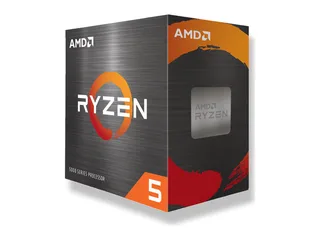
AMD's Ryzen 5 7500X3D is the processor we'd build an RTX 5060 PC around. It pairs six Zen 4 cores and 12 threads, boosting to 4.5GHz, with 96MB of L3 cache, 64MB of it stacked 3D V-Cache. That cache is what makes the difference at 1080p, the resolution this card is built for: games that constantly juggle data about the world around you run with higher and steadier frame rates than on six-core chips without it, so the RTX 5060 spends less time waiting. It runs at a 65W default TDP on the AM5 socket, and every AM5 board gives the graphics slot at least PCIe 4.0, while B850 and X870 boards offer PCIe 5.0, the RTX 5060's full link.
Some users reported needing a BIOS update before older AM5 boards would recognize it, and like all AM5 builds the first boot can take a while as the board trains the memory. Owners also note how easy it is to keep cool on a budget tower cooler. The real costs are the platform: there's no cooler or integrated graphics, and DDR5 memory is expensive at the moment. Even so, this is the chip that gets the most out of an RTX 5060 for the money, and it leaves room for a faster graphics card later.
Reasons to buy
- 96MB cache lifts frame rates at 1080p
- PCIe 5.0 slot gives the RTX 5060 its full link
- 65W is easy and quiet to cool
Reasons to avoid
- No cooler in the box
- Needs DDR5, which is expensive right now
- No integrated graphics for troubleshooting
Specifications
- Cores / threads
- 6 / 12
- Base / max boost
- 4.0GHz / up to 4.5GHz
- L3 cache
- 96MB with 3D V-Cache
- Default TDP
- 65W
- Socket / memory
- AM5 / DDR5
- PCIe
- PCIe 5.0 from the processor
Buy it if...
- You play at 1080p and want high frame rates The 96MB cache keeps the RTX 5060 busy in CPU-heavy games, where cheaper six-cores fall behind.
- You want an upgrade path AM5 boards take faster Ryzen chips later, so the platform outlives this graphics card.
Don't buy it if...
- You already own fast DDR4 memory The Intel Core i5-14400F on a DDR4 board reuses it and saves a lot while memory prices are high.
- You edit video or stream heavily The Intel Core Ultra 5 250K Plus has 18 cores for multi-threaded work.
Bottom line: The best all-round partner for an RTX 5060: X3D gaming speed, a PCIe 5.0 slot and a low 65W rating, at a price that leaves money for the rest of the build.
2Intel Core Ultra 5 250K PlusBest Intel CPU for RTX 5060
18 cores, strong gaming speed and integrated graphics for about $200.

Our score
- Gaming speed
8.7 8.7- Platform
7.6 7.6- Value
9.3 9.3
Best for: Gamers who also stream, edit video or run heavy apps and want one processor that handles both well.
Intel's Core Ultra 5 250K Plus is the strongest all-rounder in this guide and the Intel chip to pair with an RTX 5060. It has six Performance-cores and 12 Efficient-cores, 18 threads in total, a 5.3GHz maximum turbo and 30MB of cache, with a 125W base power rating that rises to 159W under turbo. Intel launched it in early 2026 at a recommended price of $199, and independent reviews found it gives around 95% of the gaming speed of the Core Ultra 7 270K Plus. In games it lands level with AMD's non-X3D six-core chips, which is plenty for the RTX 5060, while in multi-threaded work it is far ahead of anything else at the price. Its PCIe 5.0 lanes give the RTX 5060 its full link on boards that offer a PCIe 5.0 slot, and it supports DDR5 up to 7200 MT/s.
In independent testing it also ran cooler than rival chips under an all-core load, though you'll still need a capable tower cooler because none comes in the box. Its main weakness is the platform: LGA1851 isn't expected to get another processor generation, so treat a 250K Plus build as complete rather than as a base for future CPU upgrades. Some users reported memory kits that wouldn't run properly with Core Ultra chips on B860 boards, so check your board's memory support list before you buy. For gamers who also stream, record or edit, it's the better buy than an X3D chip.
Reasons to buy
- 18 cores make it a multitasking powerhouse
- Gaming speed level with six-core Ryzen chips
- Built-in graphics help when troubleshooting
Reasons to avoid
- LGA1851 isn't expected to get new chips
- Behind AMD's X3D chips in games
- Needs a proper cooler; none in the box
Specifications
- Cores / threads
- 18 (6P + 12E) / 18
- Max turbo
- Up to 5.3GHz
- Cache
- 30MB Intel Smart Cache
- Base / max turbo power
- 125W / 159W
- Socket / memory
- LGA1851 / up to DDR5-7200
- Graphics
- Intel Graphics, 4 Xe-cores
Buy it if...
- You stream or create as well as game Eighteen cores run encoding, recording and background apps without dragging down your games.
- You want integrated graphics as a backup The 4 Xe-core Intel Graphics let you run the PC if the graphics card ever needs to go back.
Don't buy it if...
- You only play games The AMD Ryzen 5 7500X3D is faster in games for similar money.
- You want to upgrade the CPU in a few years AM5 has a longer road ahead than LGA1851.
Bottom line: The best Intel processor for an RTX 5060: gaming speed in line with AMD's six-core Ryzen chips, plus far more cores for everything else.
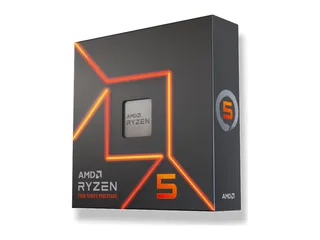
3AMD Ryzen 5 7500FBest budget CPU for RTX 5060
The cheapest way into AM5 and a PCIe 5.0 graphics slot.

Our score
- Gaming speed
8.2 8.2- Platform
9 9- Value
9.4 9.4
Best for: Budget builders who want a modern AM5 platform for an RTX 5060 and plan to drop in a faster Ryzen chip later.
The Ryzen 5 7500F is the budget CPU for the RTX 5060 we'd recommend for a new build. It's a six-core, 12-thread Zen 4 processor boosting to 5.0GHz, with 32MB of L3 cache and a 65W TDP on the AM5 socket, and it's unlocked with support for Precision Boost Overdrive and AMD EXPO memory profiles. It is essentially a Ryzen 5 7600 without integrated graphics, which is why it costs less. With an RTX 5060 that doesn't matter day to day, and it still gets the PCIe 5.0 lanes that give the card its full link on B850 boards. Depending on the version you buy, it comes either as a bare chip or boxed with AMD's small Wraith Stealth cooler.
Some users reported high temperatures, into the 90s Celsius while gaming, on very small coolers, and a budget dual-heatpipe tower cooler brings it down a long way. Because it has no graphics of its own, you'll need the graphics card installed to see anything on screen, which makes troubleshooting a little harder. In games it trails the Ryzen 5 7500X3D at 1080p, where cache counts, but the gap narrows at 1440p, where the RTX 5060 becomes the limit. As a cheap entry ticket to AM5 it's hard to beat.
Reasons to buy
- Fast Zen 4 cores at a budget price
- Unlocked, with Precision Boost Overdrive
- Same AM5 upgrade path as pricier chips
Reasons to avoid
- No integrated graphics
- Smaller cache than the X3D chips
- Runs warm on a small stock cooler
Specifications
- Cores / threads
- 6 / 12
- Base / max boost
- 3.7GHz / up to 5.0GHz
- L3 cache
- 32MB
- Default TDP
- 65W
- Socket / memory
- AM5 / DDR5
- Graphics
- None (graphics card required)
Buy it if...
- You want a new AM5 build for less It saves money over the X3D chips and still sits on the platform you can upgrade later.
- You play at 1440p At higher resolutions the RTX 5060 sets the pace, so the 7500F gives up little to pricier chips.
Don't buy it if...
- You want the highest 1080p frame rates The AMD Ryzen 5 7500X3D's extra cache makes a clear difference there.
- You want to skip buying DDR5 The AMD Ryzen 5 5600 and Intel Core i5-14400F both work with cheaper DDR4.
Bottom line: A budget RTX 5060 build's best friend: six fast Zen 4 cores on AM5, with a clear upgrade path when you want more speed.
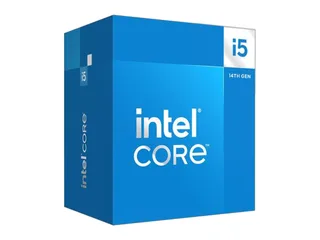
4Intel Core i5-14400FBest DDR4 CPU for RTX 5060
10 cores, a cooler in the box and support for cheaper DDR4.

Our score
- Gaming speed
7.9 7.9- Platform
7.4 7.4- Value
9 9
Best for: Budget builders and upgraders who want to reuse DDR4 memory with an RTX 5060 while DDR5 prices are high.
Intel's Core i5-14400F is our pick for an RTX 5060 build that keeps costs down by using DDR4. It has six Performance-cores and four Efficient-cores, 16 threads, a 4.7GHz maximum turbo and 20MB of cache, with a 65W base power rating and 148W at full turbo. It works with both DDR4-3200 and DDR5-4800 on the LGA1700 socket, so with a DDR4 board such as a B760 model you can carry over memory from an older PC at a time when new DDR5 kits cost a fortune. The processor supports PCIe 5.0 for the graphics slot, although most budget B760 boards wire that slot as PCIe 4.0, which still gives the RTX 5060 half its full link and is fine in most games.
Some users reported worrying about Intel's 13th and 14th Gen instability problem, but Intel lists the Core i5 non-K chips as unaffected, and installing the latest BIOS covers the rest. The included Laminar cooler handles its 65W rating, but a cheap tower cooler keeps it cooler and quieter when it turbos toward 148W in long sessions. Gaming speed is a step behind the newer Ryzen chips and there's no future upgrade on this socket, but as a way to put an RTX 5060 in a capable PC for the least money, it's a strong option.
Reasons to buy
- Works with DDR4 or DDR5 memory
- Cooler included in the box
- Ten cores for gaming and multitasking
Reasons to avoid
- LGA1700 has no future CPU upgrades
- No integrated graphics
- Included cooler is basic
Specifications
- Cores / threads
- 10 (6P + 4E) / 16
- Max turbo
- Up to 4.7GHz
- Cache
- 20MB Intel Smart Cache
- Base / max turbo power
- 65W / 148W
- Socket / memory
- LGA1700 / DDR4-3200 or DDR5-4800
- PCIe
- PCIe 5.0 and 4.0, 20 lanes
Buy it if...
- You already own DDR4 memory Pair it with a DDR4 B760 board and reuse your memory, saving a large share of a new build's cost.
- You want a complete budget platform It includes a cooler, and B760 DDR4 boards are inexpensive.
Don't buy it if...
- You want to upgrade the CPU later LGA1700 has reached the end of the road; the AMD Ryzen 5 7500F on AM5 doesn't have that problem.
- You want the highest 1080p frame rates The AMD Ryzen 5 7500X3D is noticeably faster in games.
Bottom line: The smart budget choice while memory is expensive: a capable 10-core chip that runs with DDR4 and gives the RTX 5060 a PCIe 5.0-capable slot on the right board.
5AMD Ryzen 5 5600Best AM4 upgrade CPU for RTX 5060
A cheap drop-in upgrade that gives older AM4 PCs a PCIe 4.0 slot.

Our score
- Gaming speed
7.6 7.6- Platform
7.8 7.8- Value
9.5 9.5
Best for: AM4 owners with an older Ryzen or Ryzen G-series chip who want to add an RTX 5060 without replacing the board and memory.
AMD's Ryzen 5 5600 is the cheapest sensible partner for an RTX 5060, and the upgrade we'd suggest to anyone with an AM4 PC. It has six Zen 3 cores and 12 threads boosting to 4.4GHz, 32MB of L3 cache and a 65W TDP, and the boxed version comes with AMD's Wraith Stealth cooler. It drops into most B450, B550, X470 and X570 boards after a BIOS update, keeps your DDR4 memory, and gives the RTX 5060 a PCIe 4.0 link on B550 and X570 boards. That last point matters for anyone moving up from a Ryzen 5000G or 4000G chip, which run the graphics slot at PCIe 3.0, a quarter of the RTX 5060's full link.
Some users reported that the Wraith Stealth cooler lets it run hot and loud in long gaming sessions, and a budget tower cooler fixes both. On B450 and A520 boards the slot stays at PCIe 3.0 regardless of the processor, which costs more frame rate in games that overflow the card's 8GB of memory, so a B550 board is the better home. It is the slowest chip here at 1080p and AM4 has no further upgrades, but as a way to get an RTX 5060 running properly for very little money it's excellent value.
Reasons to buy
- Cheapest way to get an RTX 5060 PC running well
- Drops into most existing AM4 boards
- Reuses DDR4 memory
Reasons to avoid
- Slowest gaming speed in this guide
- PCIe 3.0 only on B450 and A520 boards
- AM4 has no further upgrades
Specifications
- Cores / threads
- 6 / 12
- Base / max boost
- 3.5GHz / up to 4.4GHz
- L3 cache
- 32MB
- Default TDP
- 65W
- Socket / memory
- AM4 / DDR4
- PCIe
- PCIe 4.0 on B550 and X570 boards
Buy it if...
- You have an AM4 PC with an older Ryzen chip It drops in after a BIOS update and makes the RTX 5060 far more effective than a Ryzen 1000, 2000 or 3000 chip.
- You're upgrading from a Ryzen 5000G chip G-series chips run the graphics slot at PCIe 3.0; the 5600 brings it up to PCIe 4.0 on a B550 or X570 board.
Don't buy it if...
- You're building from scratch The AMD Ryzen 5 7500F on AM5 costs a little more overall but is faster and upgradeable.
- Your board is a B450 or A520 The slot stays at PCIe 3.0, so consider a B550 board or the Intel Core i5-14400F with a DDR4 B760 board.
Bottom line: The budget upgrade that makes an RTX 5060 worth putting in an older AM4 PC, especially on a B550 or X570 board.
How to choose a CPU for the RTX 5060
NVIDIA doesn't list a minimum processor for the RTX 5060, so these are the requirements that matter in practice.
RTX 5060 CPU requirements in short
Aim for a modern six-core processor from the last few generations, such as a Ryzen 5 5000 or 7000 chip or an Intel Core i5 from the 12th generation onward. Older quad-cores and early Ryzen chips will run the card, but at 1080p they hold back frame rates in busy games. NVIDIA's only system requirement is a 550W power supply, and it bases that figure on a PC with a 16-core Ryzen 9 9950X, so any of these processors fits comfortably within it.
The RTX 5060 uses PCIe 5.0 x8
The RTX 5060 connects with eight PCIe lanes rather than 16. In a PCIe 5.0 slot that's the same total bandwidth as a PCIe 4.0 x16 link, in a PCIe 4.0 slot it's half, and in a PCIe 3.0 slot it's a quarter. Most of the time the difference is small, but when a game needs more than the card's 8GB of video memory, data has to travel over that link, and slower slots lose more frame rate. Independent testing of the closely related 8GB RTX 5060 Ti found losses of up to around 10% on PCIe 4.0 in memory-heavy games and bigger drops on PCIe 3.0.
Watch out for PCIe 3.0 platforms and APUs
Some processors and boards quietly drop the graphics slot to PCIe 3.0. AMD's Ryzen 5000G and 4000G chips run the slot at PCIe 3.0 even on a B550 board, and B450 and A520 boards are PCIe 3.0 throughout. AMD's Ryzen 8000G chips cut the lanes instead: the 8700G, 8600G and 8400F run the slot at PCIe 4.0 x8, while the 8500G and 8300G drop to x4, which halves the RTX 5060's link. All five picks here give it a PCIe 4.0 link or better.
Six cores is enough; cache helps most
Six fast cores with simultaneous multithreading are plenty for gaming on an RTX 5060, and paying for eight or more mostly helps streaming and content creation. A large cache makes a bigger difference to frame rates: AMD's X3D chips stack an extra 64MB of cache on the processor, which keeps busy scenes smoother and lifts the lowest frame rates.
DDR4 or DDR5 in the 2026 memory shortage
Memory prices climbed steeply through 2026, and at the time of writing a 32GB DDR5 kit can cost more than the RTX 5060 itself. That makes DDR4 platforms worth considering again: AMD's AM4 socket and Intel's LGA1700 boards with DDR4 slots let you reuse memory you already own. A new AM5 or LGA1851 build needs DDR5, and 16GB is the minimum for an RTX 5060 gaming PC, with 32GB the comfortable target.
Cooling and power
Four of these five processors are rated at 65W and are easy to cool with a budget tower cooler. Intel's Core Ultra 5 250K Plus is rated at 125W base and 159W turbo, so give it a proper dual-heatpipe or larger cooler. None of them changes the RTX 5060's power needs much: a quality 650W unit leaves comfortable headroom, and our RTX 5060 power supply guide explains why.
How to set up your CPU and RTX 5060 for the best performance
A few settings make sure the processor and graphics card run as they should together.
- Update the motherboard BIOS first, especially on older boards, so it supports your processor and the RTX 50 series properly.
- Run the board in UEFI mode with CSM turned off. Some RTX 5060 cards show a black screen on boot in legacy mode; NVIDIA's GPU UEFI Firmware Update Tool fixes affected cards.
- Turn on EXPO (AMD) or XMP (Intel) so your memory runs at its rated speed, and make sure the sticks sit in the two slots the manual recommends for dual-channel mode.
- Enable Above 4G Decoding and Resizable BAR in the BIOS; RTX 50 cards support it, and some games run faster with it on.
- Fit the RTX 5060 in the top full-length slot, which is wired to the processor, then install the chipset driver and the latest GeForce driver.
Tip: Use a free tool such as GPU-Z to check the card's bus interface. It should read PCIe x8 5.0 or x8 4.0 under load; x4 or 3.0 means the slot, the processor or a BIOS setting is limiting it.
Other CPUs for the RTX 5060 we considered
-
AMD Ryzen 7 9800X3D
The fastest gaming CPU here by a distance, but at 1080p and 1440p the RTX 5060 runs out of graphics power long before this chip runs out of speed. Save it for a faster graphics card.
-
AMD Ryzen 5 9600X
A quick, efficient six-core chip, but in games it's no faster than the cheaper Ryzen 5 7500X3D, which has three times the L3 cache.
-
AMD Ryzen 5 8500G
Its built-in graphics are handy, but it runs the graphics slot at PCIe 4.0 x4, which halves the RTX 5060's link. The Ryzen 5 7500F is the better partner.
-
AMD Ryzen 7 5700X3D
A brilliant drop-in upgrade for AM4 owners with eight cores and 3D V-Cache, but it costs far more than the Ryzen 5 5600 and the RTX 5060 can't make full use of the difference at 1080p.
How we chose these CPUs for the RTX 5060
We shortlisted processors widely sold online and compared them on what matters when they're paired with an RTX 5060: gaming speed at 1080p and 1440p, cache size, the PCIe link the platform gives the card, memory type and total platform cost. Specs come from AMD's and Intel's official product pages and the RTX 5060's requirements from NVIDIA. We read independent benchmark results to place each chip, and we add the strengths and problems users report after living with each processor. We don't publish invented frame rates. Subscores rate gaming speed, platform and value; the overall score weighs gaming speed and value most heavily.
Best CPU for RTX 5060 FAQs
What is the best CPU for the RTX 5060?
The AMD Ryzen 5 7500X3D is our pick. Its six cores and 96MB of 3D V-Cache keep the RTX 5060 fed at 1080p, it runs at just 65W, and it sits on the AM5 platform with a PCIe 5.0 graphics slot.
Will a Ryzen 5 5600 bottleneck an RTX 5060?
Only a little. It's slower than the newer chips in this guide at 1080p, but it's well matched to the RTX 5060 for the money, especially on a B550 board that gives the card a PCIe 4.0 link. On a B450 or A520 board the slot drops to PCIe 3.0, which costs more performance in memory-heavy games.
Does the RTX 5060 work in a PCIe 3.0 slot?
Yes, it's backward compatible and works in any PCIe x16 slot. It runs with a quarter of its full link bandwidth on PCIe 3.0, though, so expect bigger drops in games that use more than 8GB of video memory. Lowering texture quality helps.
How much RAM do I need with an RTX 5060?
16GB of dual-channel memory is the minimum for a gaming PC built around the RTX 5060, and 32GB is the comfortable target for new games. Because the card has 8GB of video memory, running short of system memory as well makes stutter much more likely.
What power supply do I need for an RTX 5060 and these CPUs?
NVIDIA lists a 550W power supply for the RTX 5060. A quality 650W unit with an 8-pin PCIe or 12V-2x6 cable leaves comfortable headroom for any of these processors. Our RTX 5060 PSU guide has five picks.
Is the Core i5-14400F affected by Intel's instability problem?
Intel lists its 13th and 14th Gen Core i5 non-K desktop processors as unaffected by the Vmin Shift instability issue that hit its higher-end chips. It's still worth installing the latest BIOS for your board.
Sources
- NVIDIA: GeForce RTX 5060 family specifications
- NVIDIA: Compare GeForce graphics cards (required system power)
- NVIDIA: GPU UEFI Firmware Update Tool
- AMD: Ryzen 5 7500X3D specifications
- Intel: Core Ultra 5 processor 250K Plus specifications
- AMD: Ryzen 5 7500F specifications
- Intel: Core i5 processor 14400F specifications
- AMD: Ryzen 5 5600 specifications
- Intel: 13th and 14th Gen instability update
Update history
- First published.


